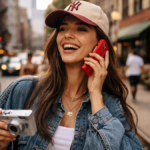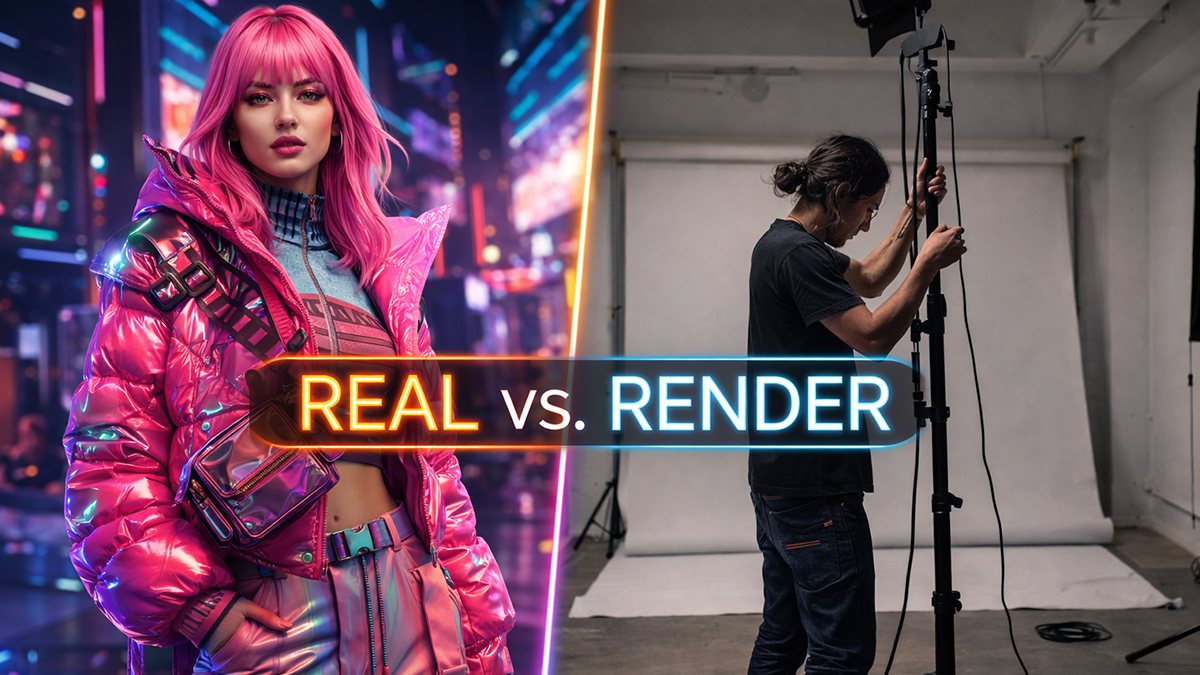
Meet Aitana.
She is 25 years old. She has pink hair. She loves video games and fitness. She has 3 million followers on Instagram. She earns $10,000 (₹8.5 Lakhs) per post promoting Nike and Samsung.
She also doesn’t exist.
Aitana is 100% pixels. She is one of the world’s top AI Influencers, generated by a Spanish ad agency using Midjourney and Stable Diffusion.
In 2026, Aitana isn’t an anomaly; she is the industry standard.
For the last decade, marketing meant sending free products to pretty people. But humans are messy. Humans get tired. Humans have scandals.
AI Influencers do none of those things. They are perfect, obedient, and infinitely scalable.
Is this the end of the human creator economy? Or is it just the beginning of a terrifying new reality?
The Economics (Why AI Influencers Are Winning)
Let’s look at the math. It is brutal. Brands are switching to AI Influencers for three specific reasons:
- Cost Efficiency:
- Human: Macro-influencers charge ₹5 Lakhs – ₹10 Lakhs per Reel.
- AI: A subscription to an Image Generator is ₹2,000/month. Once built, the model works for free.
- Logistics Speed:
- Human: Needs a photographer, studio, makeup artist, and travel tickets.
- AI: Can shoot a campaign in “Paris” at 9:00 AM and “Tokyo” at 9:05 AM without leaving the server room.
- Brand Safety (Risk):
- Human: Might get drunk at a party or tweet something offensive, ruining the brand’s reputation.
- AI: Says exactly what the brand tells it to say. It never ages. It never gets tired. It never complains.
The “Uncanny Valley” is Dead
Five years ago, virtual characters looked fake. You could tell they were video game graphics.
In 2026, the “Uncanny Valley” has been bridged.
How AI Influencers trick your brain:
- Skin Texture: AI now renders imperfections. It adds pores, tiny scars, messy eyebrows, and even “bad” lighting. This makes them subconsciously trustworthy.
- Personality Engines: These bots aren’t just photos. They are connected to LLMs (like GPT-5). They reply to comments with “feelings.” They post stories about “having a bad day” (scripted data that feels real).
We have reached a point where 40% of Gen Z users cannot distinguish between high-quality AI Influencers and heavily filtered humans.
The Big Players (Top AI Influencers of 2026)
This isn’t sci-fi. These accounts are live right now and making millions.
- Lil Miquela (The OG):
- Vibe: LA cool girl, musician.
- Earnings: Estimated $10 Million/year.
- Partnerships: Prada, Calvin Klein. She paved the way for all future AI Influencers.
- Aitana Lopez (The Fitness Model):
- Vibe: Gamer girl, fitness enthusiast.
- Why she exists: The Clueless Agency created her because they got tired of dealing with human models who had “egos.”
- Kyra (India’s First Meta-Influencer):
- Vibe: Traveler, Yoga enthusiast from Delhi.
- Impact: She promotes travel destinations to an Indian audience that is increasingly digitally native.
The Dark Side (Trust & Ethics)
It sounds efficient for brands, but AI Influencers present dangerous ethical issues.
1. The “Deepfake” Trust Issue:
If an AI influencer holds up a skincare product and says, “This cleared my acne,” it is a lie.
The AI never had acne. It doesn’t have skin.
This creates a massive ethical hole in advertising. Regulators in the EU and India are currently scrambling to pass laws requiring a “Generated by AI” watermark on these posts.
2. Impossible Beauty Standards:
We thought Photoshop was bad?
AI models are mathematically perfect. They have body proportions that are biologically impossible but visually “pleasing” to the algorithm. When teenagers compare themselves to AI Influencers, they are comparing themselves to a dataset, not a person.
Can Human Creators Survive? (The Pivot)
If you are a content creator reading this, don’t panic. But you need to pivot.
You cannot compete with AI Influencers on “Perfection.” The AI is prettier than you.
But it cannot compete on “Mess.”
The Rise of “Raw” Content:
The pendulum is swinging back.
- What AI Can’t Do: It can’t feel pain. It can’t have a bad breakup. It can’t trip and fall. It can’t have a genuine, unscripted laugh.
- The Human Advantage: Audiences are craving “Ugly Authenticity.” Vlogs shot on shaky cameras. No makeup. Real tears.
In 2026, the market is splitting:
- For Aspiration: AI wins.
- For Connection: Humans win.
Frequently Asked Questions (FAQs)
Q: Do I have to disclose if I use AI Influencers?
A: Yes. In 2026, platforms like Instagram and YouTube have a mandatory checkbox: “Is this content AI-generated?” failing to mark AI Influencers correctly can lead to an account ban.
Q: Can I create my own AI influencer?
A: Absolutely. Tools like Midjourney (for images) and HeyGen (for video) allow anyone to build a persona. Many small businesses are creating their own “Brand Mascots” to save money.
Q: Are AI Influencers replacing OnlyFans models?
A: Yes, rapidly. The adult industry is often the first adopter of tech. Customizable AI partners are stealing market share because they offer hyper-personalized interactions at scale.
The Era of “Synthetic Social”
We are entering the era of Synthetic Social Media.
Your feed is no longer a window into reality. It is a curated gallery of algorithmically generated perfection.
For brands, AI Influencers are a gold rush.
For consumers, they are a reality check.
The next time you see a stunning model holding a Coke can on your feed, pause. Look at the fingers. Look at the eyes. Ask yourself: “Is she real? Or is she just code?”