For twenty-five years, the internet followed a single, undisputed law: If you wanted to know something, you “Googled” it.
The ritual was always the same. You typed a query into a white box, hit enter, and waded through ten blue links. You dodged three ads at the top, scrolled past two sponsored “People Also Ask” boxes, and eventually found a website that—hopefully—had the answer buried under four paragraphs of fluff.
But as we cross into March 2026, that ritual is becoming a relic of the past.
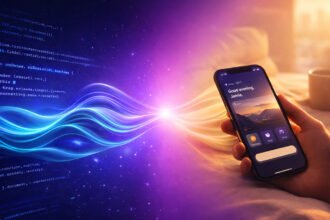
We are witnessing the most significant shift in digital behavior since the invention of the browser. The “Search Engine” is being replaced by the “Answer Engine.” The Future of Search Engines is no longer about finding a list of websites; it is about getting a direct, synthesized answer in real-time.
From the tech hubs of San Francisco to the startup corridors of Bangalore, the verdict is the same: The ten blue links are dead. Here is why the search landscape is collapsing and what the new era of AI-driven discovery means for you.
The “Enshittification” of Search
To understand why the Future of Search Engines looks so different, we have to look at why the current ones failed. In the industry, this is known as “Enshittification”—the process where a platform becomes less useful to users over time to maximize advertising revenue.
The Ad-to-Content Ratio
In 2010, the first thing you saw on Google was an answer. In 2026, the first “Screenful” on a mobile device is 100% sponsored. You are no longer the customer; you are the product being sold to advertisers. This friction has created a massive opening for competitors who prioritize the user’s time over the advertiser’s wallet.
The AI Content Tsunami
Because of the “Ghost Job” phenomenon and the rise of mass-produced AI text (ironically, the very thing we are avoiding here by keeping a magazine tone), the web is now flooded with “SEO Spam.” Traditional search engines struggle to tell the difference between a high-quality article and a 5,000-word bot-generated mess designed only to rank.
Enter the “Answer Engines” (The New Kings)
The Future of Search Engines isn’t a better version of Google; it’s a completely different species called the LLM-Search Hybrid.
Platforms like Perplexity AI, OpenAI Search, and Google Gemini have flipped the model. Instead of giving you a map to where the gold is hidden (the links), they just give you the gold (the answer).
How the “Answer Engine” Works:
- Real-Time Crawling: It scans the live web for your specific question.
- Synthesis: It reads the top 20 sources simultaneously.
- Citation: It writes a cohesive paragraph answering you, with tiny footnotes linking to the sources for verification.
The Benefit:
Efficiency. If you want to know “Which tax regime is better for a 10 Lakh salary?” (as we discussed in our Finance section), an Answer Engine does the math for you in 3 seconds. It saves you 15 minutes of clicking and reading.
What Does It Do For Me? (The Efficiency Dividend)
The shift in the Future of Search Engines provides a massive “Time Dividend” to the average professional.
1. Zero-Click Knowledge
We are moving toward a “Zero-Click” internet. If you need to know a recipe for Lazy Butter Chicken, the AI provides the steps directly on your home screen or through your smart glasses. You don’t have to visit a site and wait for 50 images to load.
2. Complex Reasoning
Traditional search engines were bad at “Multi-step” questions.
- Old Search: “Best Bali Summer Destination” + “Flights from Hyderabad.” (Two separate searches).
- New Search: “Find me a 5-day itinerary for a Bali Summer Destination including flights from Hyderabad under ₹80k and book a hotel with a gym.”
The AI Agent handles the reasoning, the comparison, and the logistics in one go.
The GEO and AEO Revolution
For businesses and publishers, the Future of Search Engines has changed the rules of marketing.
We used to talk about SEO (Search Engine Optimization). Today, we talk about GEO (Generative Engine Optimization) and AEO (Answer Engine Optimization).
- The Difference: You no longer want to rank for “Keywords.” You want to be the “Cited Source” that the AI uses to build its answer.
- The Moat: Credibility is the new currency. If an AI trusts a publication like the Daily Info Deck to provide accurate “Marcus Aurelius Lessons,” it will cite us. That citation is the most valuable “Backlink” in 2026.
The “Hallucination” Problem (The Danger Zone)
Is the Future of Search Engines perfect? No.
The biggest risk is Confident Incorrectness. AI models can sometimes “hallucinate” or make up facts.
- The Impact: If you search for “Health Tips” or “Legal Advice,” a hallucination can be dangerous.
- The 2026 Solution: This is why “Verified Sources” are making a comeback. People are realizing they need a human-curated magazine to double-check the AI’s homework. The machine provides the speed; the human editor provides the truth.
Frequently Asked Questions (FAQs)
Q: Is Google Search going to disappear?
A: No, but it is evolving. Google is rapidly turning into “Gemini,” where the search results are secondary to the AI summary. It will remain a tool for “Shopping” and “Local Services,” but for “Learning,” it is losing ground.
Q: Do AI Answer Engines cost money?
A: Most have a free tier, but the “Pro” versions (using the most advanced models like GPT-5 or Claude 3.5) usually cost around $20/month. However, for most users, the built-in AI in their 2026 Smartphones (as we covered in our Gadgets article) is more than enough.
Q: How do I ensure I’m getting accurate info from AI?
A: Always check the Citations. If an AI gives an answer but doesn’t show you the source links, do not trust it for important decisions, especially regarding Finance or Health.
Adapt or Be Left Behind
The Future of Search Engines is an evolution of human intent. We never actually wanted “links.” We wanted Answers.
As the digital world accelerates, the ability to find information faster than your competitor is the ultimate competitive advantage. Whether you are a student researching for a project or a CEO looking for market trends, the tools you use to “know” things have changed.
Don’t be the person still scrolling through Page 2 of Google. Embrace the Answer Engines. Ask the questions. Get the time back.
The white box is still there, but the brain behind it is finally awake.