Remember when a vacation meant waking up at 6:00 AM to catch a tour bus?
You would sprint through Paris or Rome, taking selfies at 10 monuments a day, eating on the go, and collapsing into bed exhausted. You needed a vacation just to recover from your vacation.
In 2026, that era is dead.
Welcome to the age of “Sleep Tourism.”
From London to Bali, and New York to Kerala, travelers are no longer booking hotels for the view, the pool, or the buffet. They are booking them for the Bed.
We are talking about soundproof suites, AI-controlled mattresses, “Sleep Concierges,” and pillow menus that look like wine lists. It is a booming $600 Billion global industry.
But why are we paying $1,000 (approx ₹84,000) a night just to close our eyes? And is it actually worth it?
The Burnout Epidemic (Why Now?)
To understand the trend, look at the calendar.
We are living in the “Always-On” economy.
- The American works 50 hours a week and answers emails on Sunday.
- The Indian deals with traffic and late-night calls with US clients.
- The European is stressed about the economy and climate.
We are collectively exhausted.
According to 2025 data, 40% of global adults suffer from chronic sleep deprivation.
Hotels realized something brilliant: Luxury isn’t gold taps anymore. Luxury is silence.
So, they pivoted. They stopped selling “Stays” and started selling “Restoration.”
What Exactly Happens in a Sleep Retreat?
If you think this is just a quiet hotel room with a “Do Not Disturb” sign, think again.
This is Clinical Sleep Science wrapped in 5-star luxury.
Here is what a typical “Sleep Retreat” in 2026 looks like:
1. The Check-In (The Detox)
When you arrive at a place like The Zedwell (London) or a Six Senses Sleep Program, they might ask for your phone.
Yes, they confiscate your device.
- Why? Blue light kills melatonin. You cannot sleep if you are scrolling Instagram.
- The Vibe: The lobby smells of lavender and chamomile. The lighting is dim. Your cortisol levels drop the moment you walk in.
2. The Room (The Hardware)
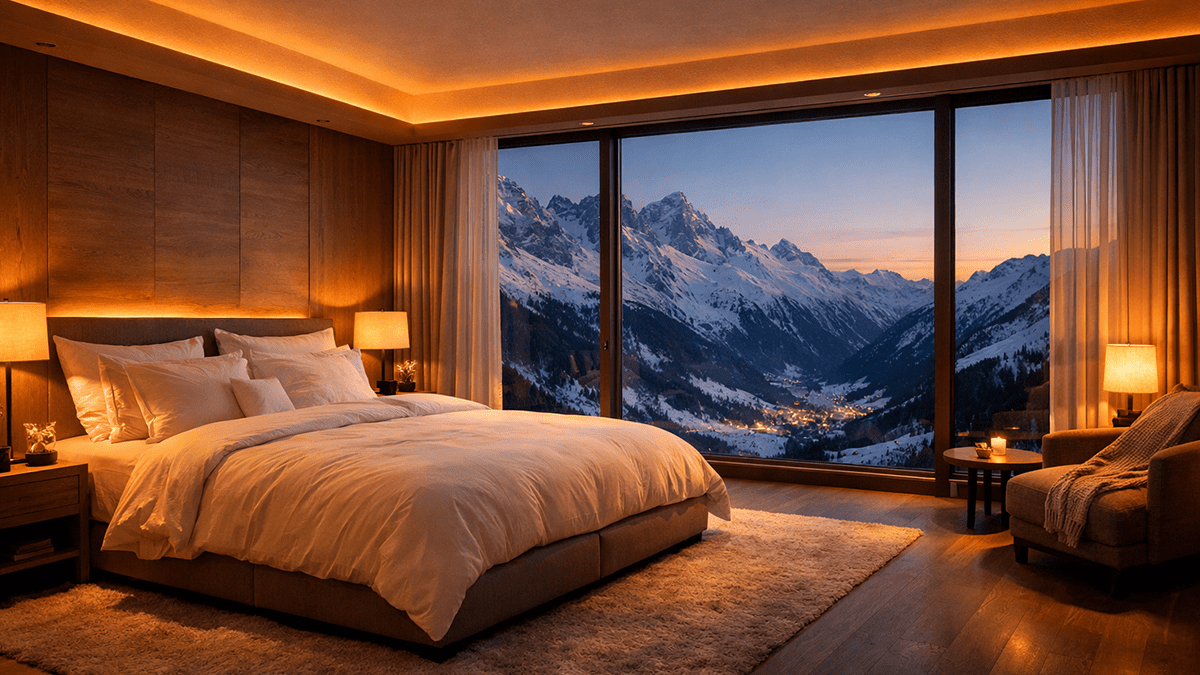
This isn’t a normal room. It is a “Sleep Sanctum.”
- The Bed: Likely a Hästens (Swedish hand-made mattress worth $50,000) or an Eight Sleep Pod that actively cools your body temperature to the optimal 18°C (65°F).
- The Air: High-grade HEPA filters pump in purified, oxygen-rich air.
- The Sound: No city noise. The walls are double-padded. A white-noise machine plays “Pink Noise” (frequencies that deepen sleep).
3. The Tech (The Data)
At the Equinox Hotel (New York), you don’t just sleep; you get analyzed.
You wear an Oura Ring or a Whoop band provided by the hotel.
In the morning, a “Sleep Coach” analyzes your data.
- “Sir, you woke up 4 times between 3 AM and 4 AM. Let’s adjust your dinner menu and change your pillow density tonight.”
It is hyper-personalized rest.
The Top Destinations (Global & Local)
If you have the budget and the burnout, here is where the world is going to nap in 2026.
1. The Ultra-Luxury: Hästens Sleep Spa (Coimbra, Portugal)
This is the Mecca of sleep.
- The Hook: A boutique hotel with only 15 rooms, entirely dedicated to the world’s most expensive beds.
- The Experience: You are taught how to lie down correctly to align your spine. There are no TVs in the room. It is a library of silence.
- Cost: Approx $800 – $1,200 (€750 – €1,100) per night.
2. The Spiritual Detox: Bali & Kerala (India/Indonesia)
For those who want less tech and more soul.
- Bali (Ubud): Yoga Nidra (Yogic Sleep) retreats where you meditate into a deep trance state.
- Kerala (Kumarakom): Ayurveda centers use Shirodhara (dripping warm oil on the forehead) to induce a sleep state so deep it feels like hibernation.
- Cost: Accessible luxury. Approx $200 – $400 (₹16,000 – ₹35,000) per night.
The “Sleep Divorce” Trend (It’s Not What You Think)
If you are married, you know the struggle.
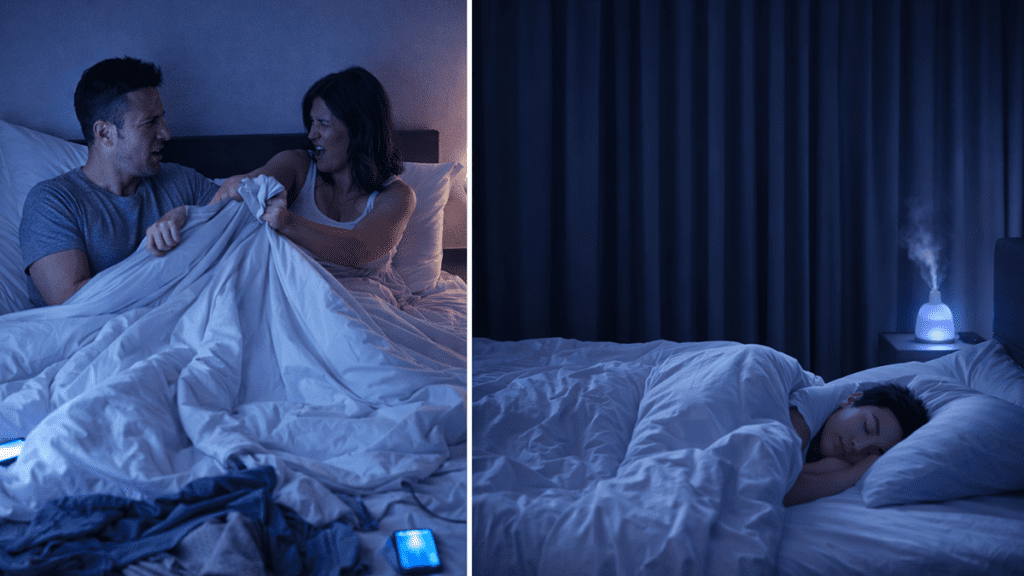
One person likes the room freezing cold (AC at 18°C). The other wants it tropical (24°C). One snores like a tractor. The other steals the blanket.
In 2026, the stigma is gone. Enter the “Sleep Divorce.”
It sounds harsh, but it saved thousands of marriages.
Hotels like the Hilton London or Taj Lands End (Mumbai) are seeing a massive spike in couples booking connected rooms—not to cheat, but to sleep.
They hang out, watch TV, and have romance in one room. Then, when it’s time for REM sleep (Rapid Eye Movement), they go to their separate beds.
- The Result: Better mood, more energy, and ironically, a better relationship because you aren’t resentful of your partner waking you up at 3 AM.
How to Build a “Sleep Hotel” at Home (For Free)
You don’t need to fly to Switzerland or spend $1,000 (₹84,000) to fix your burnout. You can turn your bedroom in New York, Berlin, or Bangalore into a sanctuary this weekend.
Here is the 5-Step Protocol used by luxury hotels:
1. The “Cave” Rule (Light):
Luxury sleep suites are pitch black. Even the standby light on your TV ruins melatonin production.
- The Hack: Buy Blackout Curtains (
30/₹2,500)orahigh−qualityMantaSleepMask(30/₹2,500)orahigh−qualityMantaSleepMask(20 / ₹1,800). Tape over the little red LEDs on your AC/TV.
2. The Temperature Drop:
Your body needs to cool down to initiate sleep.
- The Hack: Set your thermostat to 18°C – 20°C (65°F – 68°F) an hour before bed. If you don’t have AC, take a hot shower before bed—the rapid cooling when you step out tricks your body into sleep mode.
3. The “Pink Noise” Wall:
Hotels use soundproofing. You have noisy neighbors.
- The Hack: Don’t play music. Play “Pink Noise” (it sounds like heavy rain or a waterfall) on a loop using a Bluetooth speaker. It masks sudden sounds like car horns or doors slamming.
4. The Scent Anchor:
Smell is the strongest trigger for memory.
- The Hack: Use a Lavender spray ($10 / ₹500) on your pillow every night. Your brain will eventually associate that smell with “Shutdown Mode.”
5. The Digital Curfew:
This is the hardest one.
- The Hack: Charge your phone in the kitchen. Buy an old-school alarm clock ($5 / ₹300). If the phone is in the room, you lose.
The Verdict – Is Sleep Tourism a Scam?
Is paying €800 a night just to lie in a bed a scam?
Critics say yes. They say, “Just go to bed earlier.”
But that misses the point.
We pay for a Personal Trainer because we lack the discipline to gym alone. We pay for Sleep Tourism because we lack the discipline to disconnect alone.
If spending $1,500 on a 3-day retreat fixes your insomnia, restores your focus, and stops you from snapping at your kids, it is cheaper than therapy—and certainly cheaper than a heart attack.
Bottom Line:
- If you are rich: Go to the Swiss Alps. It is the ultimate luxury.
- If you are smart: Copy their methods at home. Sleep is free; the discipline is what costs you.
Frequently Asked Questions (FAQs)
Q: What is the best destination for Sleep Tourism?
A: For luxury, The Zedwell in London is famous for windowless, soundproof cocoons. For wellness, Six Senses in Ibiza (Spain) offers clinical sleep programs. For budget/nature, Ubud (Bali) has amazing open-air sleep retreats.
Q: Does “Sleep Divorce” mean my marriage is failing?
A: No! In 2026, roughly 35% of couples admit to sleeping separately sometimes. It prioritizes health over tradition. Sleep deprivation destroys relationships faster than separate beds do.
Q: What is the best temperature for sleep?
A: Science suggests 18.3°C (65°F) is the optimal temperature for the human body to enter deep sleep. Anything above 24°C (75°F) disrupts REM cycles.
Q: Can I just take melatonin instead?
A: Melatonin is a hormone, not a sedative. It signals “it is night,” but it doesn’t force sleep. Relying on pills without fixing your environment (light/noise) is a temporary fix, not a cure.
Rest is the New Hustle
For decades, we wore “I only slept 4 hours” as a badge of honor. We thought burnout meant we were working hard.
In 2026, that mindset is obsolete.
The highest performers—CEOs, athletes, and creators—are the ones who sleep 8 hours. They know that an hour of sleep is worth two hours of productivity.
Whether you book a flight to a sleep spa in Portugal or just buy some blackout curtains for your apartment in Pune, the message is the same: Prioritize your rest.
The world will still be there when you wake up. And you’ll be better equipped to handle it.
Disclaimer
This article is for informational purposes only and does not constitute medical advice. If you suffer from chronic insomnia or sleep apnea, please consult a medical professional or sleep specialist. Prices mentioned are estimates based on 2026 rates and may vary.