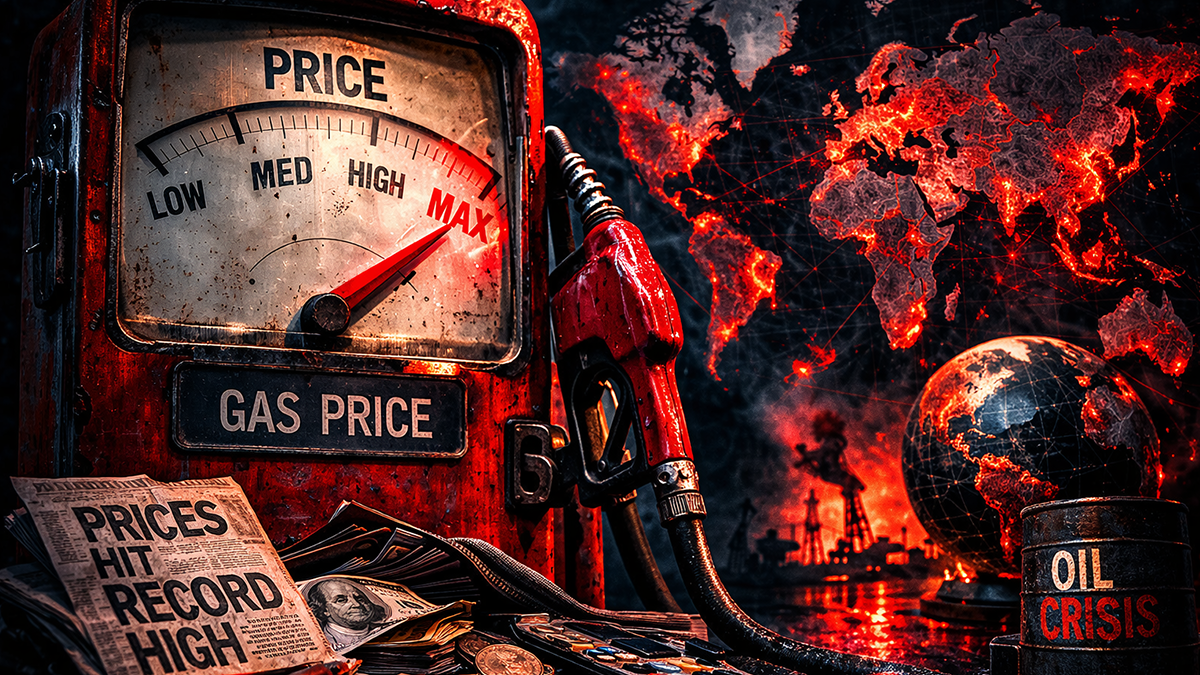
You filled your tank on Monday. You winced at the price.
You filled it again on Thursday. You winced harder.
The pump price keeps inching up, and it feels like there is no explanation other than “The Government is being greedy.”
But the reality is far more complex. In early 2026, we are seeing another major spike in global crude oil prices.
This isn’t just about your daily commute; this is about inflation in your groceries, the price of your next phone’s plastic casing, and the entire balance of power on the world stage.
Why is the price of “Black Gold” climbing again, and how does this impact your ₹10 Lakh salary and your dreams of buying an EV? Let’s decode the global energy market.
The Immediate Cause: The 2026 Production Squeeze
Oil is governed by the oldest rule in economics: Supply and Demand.
When demand is high and supply is low, the price skyrockets.
The OPEC+ Strategy
The primary reason for the spike is the OPEC+ Alliance (OPEC nations plus allies like Russia).
In Q1 2026, OPEC+ collectively decided to continue voluntary production cuts.
- The Goal: They are deliberately keeping supply tight to ensure the price of a barrel of Brent Crude stays comfortably above $85 USD.
- The Effect: When they cut production, global inventory shrinks, and every country that imports oil—including India—feels the pinch first at the pump. They are controlling the market.
The Geopolitical Hedge
Global tensions (especially in the Middle East and Eastern Europe) are forcing countries to stockpile oil rather than sell it. When a country feels threatened, it ensures its strategic reserves are full. This hoarding behavior sucks supply out of the spot market, driving prices up for everyone else.
The “War Premium” and the Red Sea Chokehold
You cannot talk about oil in 2026 without talking about the wars.
When you pay for petrol, you aren’t just paying for the oil; you are paying a “War Premium.” Currently, traders add an invisible $5 to $10 to every barrel just because they are terrified a missile might hit an oil facility in the Middle East or Eastern Europe.
But for India, the bigger issue is the Shipping Routes.
Because of ongoing conflicts and drone attacks in the Red Sea, massive oil tankers are being forced to avoid the Suez Canal. Instead of taking the shortcut, they have to sail all the way around the continent of Africa (the Cape of Good Hope) to reach Asian and European markets.
The Math of War:
- More Distance: It adds 10 to 14 days to the journey.
- More Fuel: The ships burn millions of dollars in extra fuel just to make the trip.
- Higher Insurance: Insurance companies are charging astronomical rates to cover these ships traveling through conflict zones.
Who pays for that extra fuel, time, and insurance? You do. It is baked right into the price displayed at your local petrol pump.
What This Means for the Indian Consumer (The Inflation Loop)
For India, rising crude oil prices are like pouring kerosene on an existing inflation fire.
1. The Fuel Tax Spiral:
When the international price of crude goes up, the government has two painful choices: absorb the cost (which hurts tax revenue) or pass it on to you. Since 2026, the government has been cautious about raising excise duty, so they let the Dynamic Pricing Model do the work.
- Your Cost: The price hike at the pump is immediate and reflects the global rise.
2. Transport Cost Inflation:
This is the hidden tax. Oil powers trucks, ships, and trains.
- When diesel prices rise, the cost for a truck driver to transport vegetables from Nashik to Delhi goes up.
- That truck driver adds that extra cost to the vegetable wholesaler.
- The wholesaler adds it to the retailer.
- The retailer adds it to your final bill at the market.
- Result: Your cost of living rises, even if you don’t own a car.
3. Weakening Rupee:
India imports over 80% of its crude oil. When we need more dollars to buy the same barrel of oil, the Rupee weakens against the Dollar. A weaker Rupee makes every imported item (electronics, luxury goods, raw materials) more expensive.
The Global Tug-of-War (Demand vs. Green Energy)
This price hike is happening despite the massive global shift toward Electric Vehicles.
The Slow EV Transition
We discussed this in our EV vs. Petrol article. The transition is not happening fast enough.
- US/Europe: Adoption is high, but the charging infrastructure is still lagging for long trips.
- India: Adoption is strong in the 2-wheeler segment, but high upfront costs keep most family car buyers on Petrol/Hybrid.
The demand for oil from the massive remaining fleet (cars, planes, ships) is still too high for the supply cuts not to affect prices.
China’s Appetite
China is the world’s largest oil importer. Despite their own economic slowdowns, when their manufacturing sector gets a stimulus boost, their demand for energy spikes instantly. This creates a massive, sudden demand shock that OPEC+ cannot always control, pushing global prices up.
The Future Forecast (When Will It Stabilize?)
Will prices crash next month? Unlikely.
- OPEC+ Stance: They have shown zero interest in increasing production until their price targets are met.
- US Production: US shale oil production is not increasing fast enough to offset OPEC+ cuts.
- Geopolitical Risk Premium: As long as conflicts exist, traders will add a “risk premium” of $5 – $10 per barrel just in case of a supply disruption.
The most likely forecast for mid-2026 is “High Stability,” meaning we are stuck paying high prices until either a major geopolitical event calms down, or EV adoption hits a critical tipping point.