For the last twenty years, the digital world was a place of “How.”
If you wanted to build an app, you had to learn how to code—mastering the unforgiving syntax of Python or Javascript. If you wanted to sell a product, you had to learn how to navigate complex ad managers and data attribution models. The “How” was the barrier to entry. If you didn’t have the technical muscles, you didn’t get to play the game.
But the wind has shifted. We are currently witnessing the collapse of the technical barrier.
Two new concepts are rising to take its place: Vibe Coding and Vibe Marketing. One is changing how we build software; the other is changing how we build brands. Individually, they are powerful. Together, they represent a fundamental shift in the human economy—from the era of “Technical Skill” to the era of “Pure Intent.”
If you want to understand why some businesses are exploding with growth while others are dying despite having “better” technology, you need to understand the invisible thread connecting Vibe Marketing vs Vibe Coding.
The End of the Manual Era: What is Vibe Coding?
To understand the correlation, we first have to define the players. Let’s look at Vibe Coding.
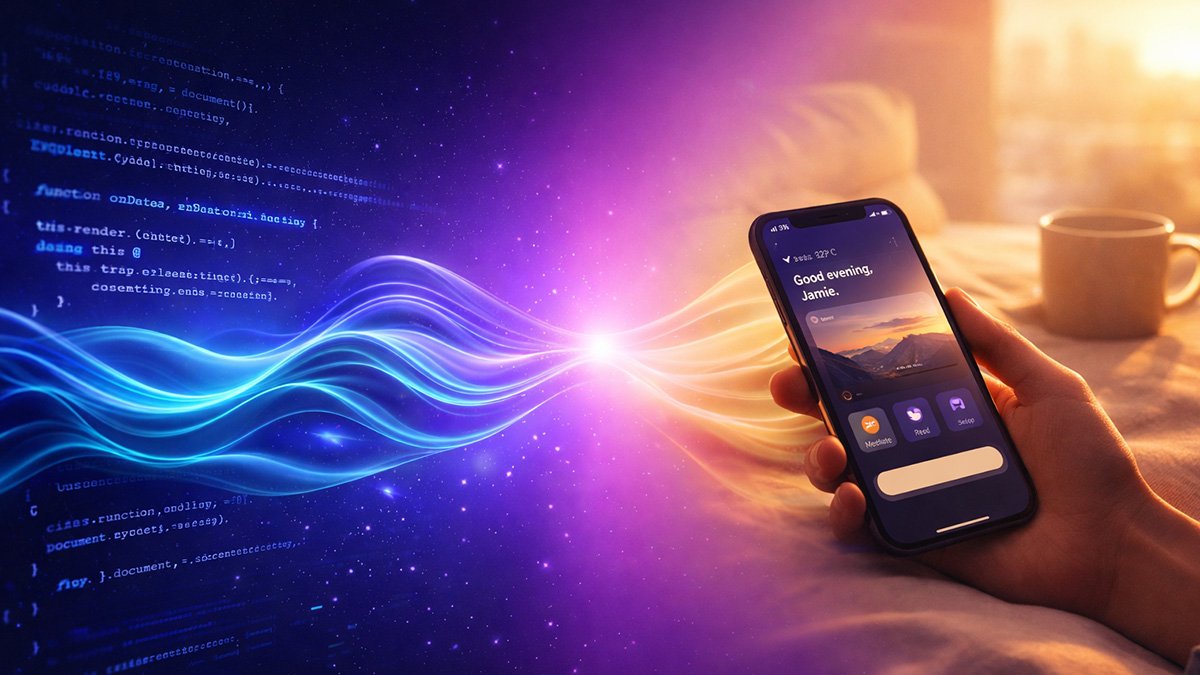
Traditionally, coding was like masonry. You laid one brick (one line of code) at a time. If one brick was crooked, the whole building fell down. Vibe Coding flips this. With the rise of advanced AI agents, a person doesn’t need to write the code anymore. Instead, they act as a Director.
You sit in front of an AI and describe the “Vibe” of what you want. “I want a fitness app that feels like a quiet forest. It should be minimalist, track my steps without asking for data, and give me a gentle nudge only when the sun is setting.”
The AI handles the technical drudgery. It writes the thousands of lines of code. The human’s job is to maintain the “Vibe”—ensuring the product feels, looks, and reacts exactly as intended. Vibe Coding is the transition from being a “Construction Worker” to being an “Architect.” It turns “Taste” into a tangible, functional product.
Selling an Aura, Not a Feature: What is Vibe Marketing?
On the other side of the bridge, we have Vibe Marketing.
For years, marketing was about “Features and Benefits.” Our soap has 20% more moisturizer. Our car has more horsepower. But modern consumers—especially the digitally native ones—have developed a “filter” for traditional ads. They don’t want a list of features. They want a Feeling.
Vibe Marketing is about creating an emotional resonance that a specific community identifies with. Look at a brand like Liquid Death. They sell water in a can. On paper, it’s just water. But their “Vibe” is heavy metal, punk rock, and “murdering your thirst.” People don’t buy the water; they buy the Vibe.
It’s about Aesthetic Sovereignty. It’s the realization that in a world of infinite choices, people gravitate toward the brand that “gets” them on a subconscious level. It’s not about convincing someone to buy; it’s about making them feel like they belong to a tribe.
The Invisible Bridge: How They Feed Each Other
Now, here is where it gets interesting for every entrepreneur and professional. The correlation in Vibe Marketing vs Vibe Coding isn’t just a coincidence; they are two sides of the same coin.
1. The Loop of Instant Execution
In the old world, a marketer would have a “Vibe” in mind, but they’d have to wait six months for the “Dev Team” to build it. By the time the product was ready, the Vibe was gone.
- The Shift: Vibe Coding allows the marketer to build the product themselves in real-time. If the marketing vibe is “Hyper-Fast and Chaotic,” the coder can build an app that mirrors that energy in a weekend. The distance between “Idea” and “Reality” has shrunk to zero.
2. Intuition Over Documentation
Both Vibe Coding and Vibe Marketing rely on Intuition.
You can’t write a manual for a “Vibe.” You either feel it or you don’t. When you Vibe Code, you are trusting your gut to tell the AI when the app feels “right.” When you Vibe Market, you are trusting your gut to know when the brand feels “authentic.” This makes “High-Taste Individuals” the most valuable assets in any company.
3. The Rise of the “Total Creator”
Because you can now code with your “Vibe” and market with your “Vibe,” the roles are merging. We are seeing the rise of the “Solopreneur” who builds the software, designs the brand, and runs the marketing—all powered by a single, consistent vision. The silos are breaking down.
The Common Man’s Superpower: Why This Matters to You
You might think, “I’m not a coder and I’m not a big brand, so why should I care?”
The reason Vibe Marketing vs Vibe Coding matters to the common man is that it democratizes power.
For the first time in history, you don’t need a million dollars or a Computer Science degree to compete with a giant corporation. You just need a better “Vibe.”
- If you have a unique perspective on a hobby, you can Vibe Code a community app for it.
- If you have a unique personality, you can Vibe Market yourself into a personal brand.
We are moving into a “Gifting Economy” where the most successful people are those who can gift a specific feeling (a Vibe) to their audience. Technology is becoming a commodity. Marketing is becoming an art. Your unique “human-ness”—your quirks, your style, your weird ideas—is now your greatest competitive advantage.
The Risk Factor: Can a Vibe Fail?
Is it all sunshine and rainbows? Not quite. The danger of Vibe Marketing vs Vibe Coding is Shallowness.
If you build an app that has a great “Vibe” but doesn’t actually solve a problem, it will die. If you market a “Vibe” that isn’t backed by an actual high-quality product, you will be exposed as a fraud.
The “Vibe” is the wrapper, but the Value is the gift inside. The most successful people in this new era will be those who use Vibe Coding to build something truly useful, and Vibe Marketing to make that utility feel like magic.
Frequently Asked Questions (FAQs)
Q: Do I still need to learn the basics of marketing and coding?
A: Yes. Think of AI as a powerful horse. To ride it, you don’t need to be as strong as the horse, but you do need to know how to steer. Understanding the fundamentals helps you give better “Vibe” instructions to the machine.
Q: Is “Vibe” just another word for “Branding”?
A: Branding is often planned and clinical. A “Vibe” is more organic and emotional. Branding is what a company says about itself; a Vibe is how a community feels about the company.
Q: How do I find my own “Vibe” for a project?
A: Look at your saved posts on Instagram, your favorite movies, and the books you re-read. The common thread between the things you love is your Vibe. Don’t copy others; amplify what you already naturally gravitate toward.
Q: Will “Vibe Coding” put software engineers out of work?
A: It will change their jobs. Instead of writing “boilerplate” code, they will become “System Architects” and “Vibe Overseers.” They will handle the 10% of complex logic that AI still struggles with, while overseeing the 90% that the AI generates.
The Age of the Individual
The correlation between Vibe Marketing vs Vibe Coding tells us one thing: The world is becoming more human, not less.
As the machines take over the “boring” work of typing and calculating, we are forced back to our most basic human skill: Expression. We are all becoming directors, editors, and curators.
Don’t be intimidated by the AI revolution. Embrace the shift. Stop trying to compete with machines on speed or accuracy. Start competing on Taste. Develop your eye. Refine your intent. Find your Vibe.
The keyboard is fading away. The canvas is wide open. What are you going to create?