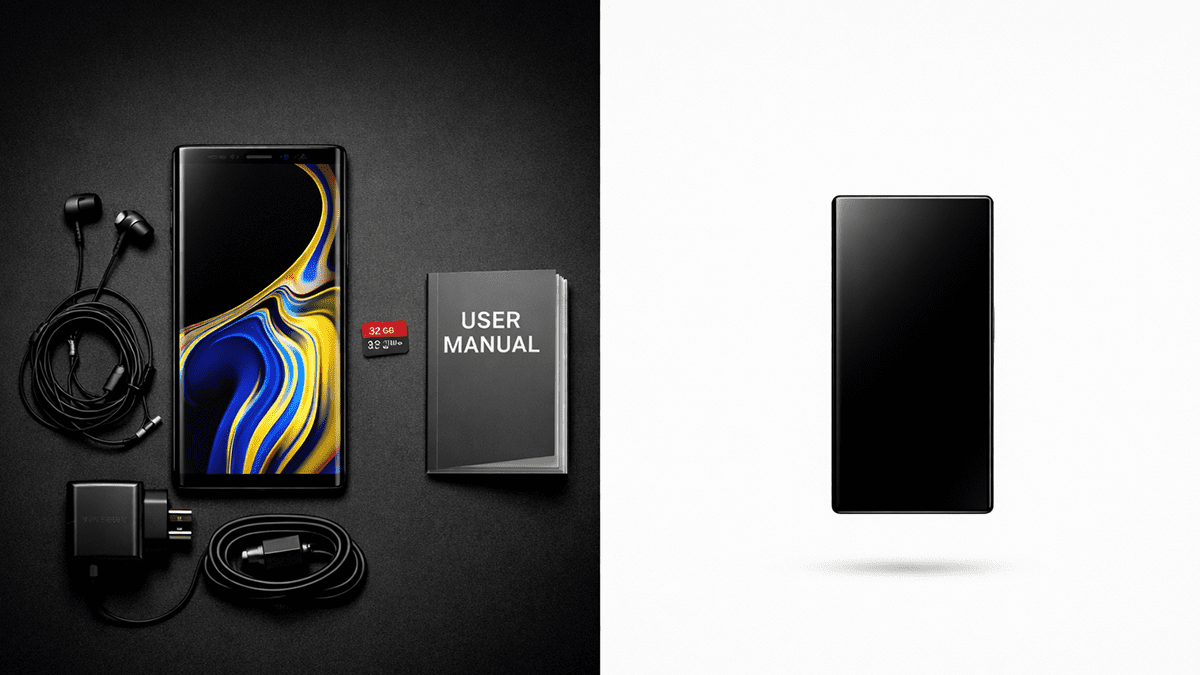
Do you remember unboxing a phone in 2015?
It felt like Christmas. You opened the box and found a heavy fast charger, a pair of decent wired earphones, and a clear protective case. You felt like you got your money’s worth.
Fast forward to 2026.
You buy the latest flagship phone for ₹1,40,000 ($1,200). You open the ultra-slim paper box. Inside, there is just the phone and a cable.
This trend of smartphone features removed from the box—and the device itself—is the biggest controversy in tech today. It isn’t just about saving plastic; it is about “Tech Shrinkflation.” Innovation is no longer about what companies add; it is about what they take away while charging you more.
Here is the deep dive into why your favorite features are vanishing.
The List of Top Smartphone Features Removed (R.I.P.)
Before we analyze the business logic, let’s look at the graveyard. The list of smartphone features removed over the last decade is staggering.
- The Headphone Jack (3.5mm):
- The Excuse: “We need space for bigger batteries.”
- The Reality: They wanted to sell you ₹20,000 wireless earbuds. And it worked.
- The Micro-SD Card Slot:
- The Excuse: “External cards are too slow for modern apps.”
- The Reality: By ensuring this was one of the smartphone features removed, brands force you to buy the expensive 512GB model or pay for monthly Cloud Storage forever.
- The Charger in the Box:
- The Excuse: “Environmental protection.”
- The Reality: It saves billions in shipping costs (smaller boxes). Plus, they sell you a separate charger for ₹2,500.
- The Physical SIM Tray (US Models):
- The Excuse: “Waterproofing.”
- The Reality: Carrier lock-in.
And in 2026? We are now seeing physical buttons and charging ports being added to the list of smartphone features removed.
The “Ecosystem” Trap (The Real Reason)
Why do companies do this?
Hardware sales have plateaued. People are keeping their phones for 3-4 years instead of upgrading annually.
To keep profits high, manufacturers rely on a strategy: Break the phone into pieces and sell it back to you.
When you look at the smartphone features removed, you realize they haven’t disappeared; they have just become separate products.
- Audio: Used to be free (Jack). Now it’s a product (Buds).
- Power: Used to be free (Brick). Now it’s a product (Adapter).
- Storage: Used to be cheap (SD Card). Now it’s a subscription (iCloud/Google One).
They aren’t removing features to make the phone better. They are ensuring smartphone features removed make the business model better. It is the IKEA model—they sell you the table, but the screws are extra.
The “Button-Less” Future (2026 Trend)
If you hold the latest high-end flagship in 2026, you might notice something weird: The Volume and Power buttons don’t click.
Solid State (Haptic) buttons are the latest victim in the trend of smartphone features removed. They are just pressure-sensitive zones that vibrate.
Why remove buttons?
- Waterproofing: No holes = IP69 ratings.
- Durability: Fewer moving parts to break.
The Downside:
If your battery dies or software freezes, how do you force restart? And try finding the volume button in your pocket without looking. Without the physical bump, it’s a guessing game.
The Portless Dream (Wireless Only)
This is the endgame.
Rumors suggest the “iPhone Ultra” or “Galaxy Z Zero” will have zero ports. No USB-C. No nothing.
While a “Portless Phone” sounds futuristic, it presents major issues:
- Slow Charging: Wireless is inefficient and generates heat.
- Data Transfer: Moving a 50GB video file via Wi-Fi takes 20 minutes. A cable takes 2 minutes.
If the charging port becomes the next item on the list of smartphone features removed, users will be tied completely to the manufacturer’s wireless accessories.
Is There a Silver Lining?
Is it all just corporate greed? Or is there actually a benefit to having smartphone features removed?
To be fair, there are two engineering benefits:
- Longevity: Fewer holes (ports/jacks) mean fewer points of failure. A sealed phone from 2026 is physically tougher than a phone from 2016.
- Standardization: While the charger brick is gone, the forced move to USB-C means you can use your laptop charger for your phone.
Frequently Asked Questions (FAQs)
Q: Why do budget phones still have headphone jacks?
A: Budget buyers are price-sensitive. If a budget brand has smartphone features removed like the jack or charger, the customer will simply buy a competitor’s phone. Flagship buyers are more “loyal” and willing to pay extra.
Q: Can I use my old charger for a new 2026 phone?
A: Yes, but it will be slow. New phones support 45W-100W charging. Your old 2018 brick is likely 5W or 10W.
Q: Will SIM card trays disappear in India too?
A: Eventually, yes. While the US moved to eSIM-only years ago, India is lagging. But by 2027, expect the physical SIM slot to be one of the next smartphone features removed here too.
Vote With Your Wallet
The trend is clear.
2026 Smartphones are faster, smarter, and stronger than ever. But they are also emptier.
We are paying for the privilege of minimalism. The list of smartphone features removed will only grow if we keep buying these devices without complaint.
If you miss the SD card slot or the headphone jack, your only option is to look at niche “Gaming Phones” or mid-range devices. But if you want a flagship? Get ready to buy a dongle.