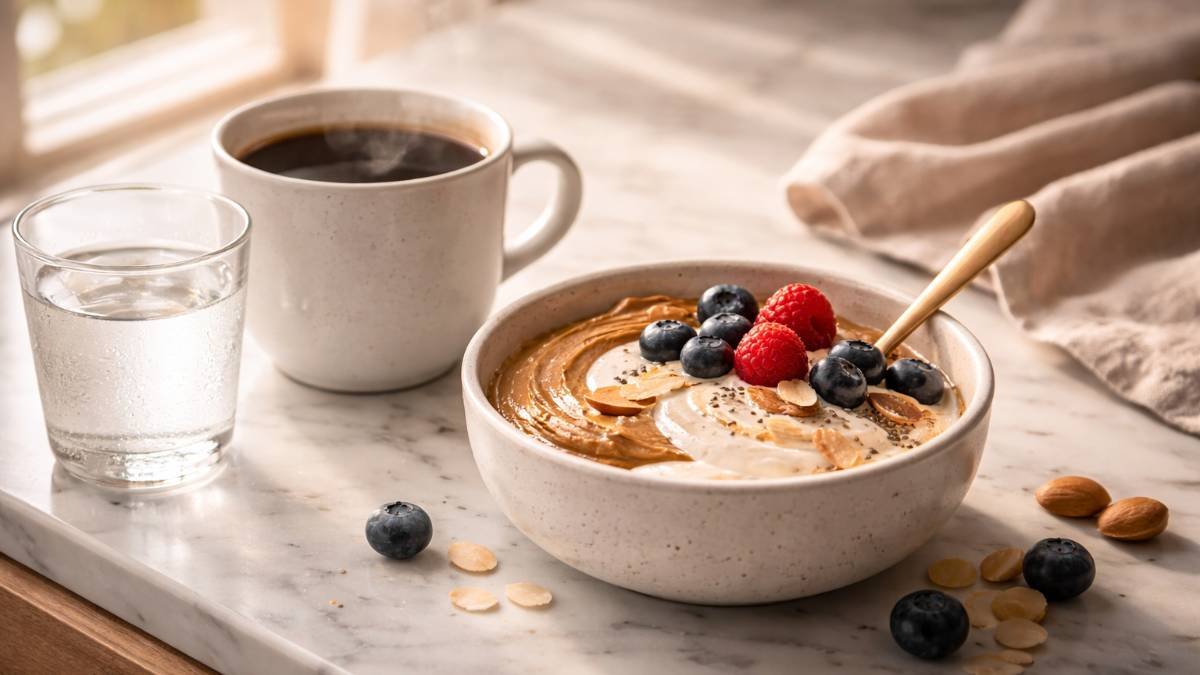
The alarm goes off. You drag yourself to the kitchen, flip the switch on the coffee machine, and wait for that first hit of liquid gold. You drink it black. It’s bitter, it’s hot, and for 30 minutes, you feel like you can conquer the world.
Then, 11:00 AM hits. Your heart is racing, you feel jittery, and suddenly, you’re crashing hard. You’re reaching for a second cup, then a third, and by the afternoon, you’re just tired again.
If this sounds like your morning, you aren’t just tired; you are mismanaging your body’s chemistry.
The ritual of drinking coffee on empty stomach is a staple for millions of us. It feels efficient. It feels like “starting clean.” But biologically, it’s a setup for failure. You are essentially pouring fuel into an engine that hasn’t even been turned on yet.
The Cortisol Paradox (Why Your Body Panics)
To understand why your morning cup is failing you, we have to look at your “Morning Hormone”: Cortisol.
When you wake up, your body naturally releases a surge of cortisol. This is your biological alarm clock. It tells your body to get moving, increases your blood sugar, and prepares you for the day. This cortisol peak is usually highest between 7:00 AM and 9:00 AM.
When you drink coffee on empty stomach, you are adding a massive dose of caffeine (a stimulant) onto a system that is already peaking in stress hormones.
It’s like adding a turbocharger to an engine that is already redlining. Your body perceives this as an acute stress event. Your heart rate goes up, your blood pressure spikes, and your body floods with unnecessary stress hormones. You aren’t “getting energy”—you are forcing your body to panic. That “jolt” you feel isn’t just alertness; it’s a stress response.
The Energy Crash (The Sugar Rollercoaster)
Because your cortisol levels were forced to spike, your blood sugar levels eventually have to drop.
When you drink coffee on empty stomach, you’re essentially skipping the most important physiological rule of the morning: The Break of the Fast.
Your body needs “Fueling” before it can handle “Stimulation.” By bypassing the need for nutrients, the caffeine forces your liver to dump glucose into your bloodstream. You get a temporary high, followed by a sharp drop in blood sugar a few hours later.
This is the “11:00 AM wall.” It’s not that you need more coffee; it’s that your body is screaming for actual calories to stabilize your blood sugar.
The Protein “Lock” (How to Fix Your Morning)
The fix is simple, and it takes less than 60 seconds. Before you take that first sip of coffee, you need to create a “Nutrient Buffer.”
You need a small, high-protein snack. Protein is the key here because it slows down the rate at which caffeine and sugar enter your bloodstream. It acts like a “lock,” stabilizing your system so that the coffee provides steady energy instead of a frantic spike.
3 “Two-Minute” Snacks to Eat Before Coffee:
- The Greek Yogurt Scoop: Three tablespoons of plain Greek yogurt or thick curd. It’s packed with protein and healthy fats that will coat your stomach and calm the nervous system.
- The Nut Handful: 5-6 almonds or walnuts. Chew them slowly before you start your coffee. The healthy fats stabilize your blood sugar instantly.
- The Single Egg Hack: If you have time, one boiled egg is the gold standard. It provides the protein and the amino acids your body needs to start metabolic processes before the stimulant hits.
The Protocol:
- Wake up.
- Drink one glass of water (rehydrate first!).
- Eat your protein snack (30 seconds).
- Wait 10 minutes.
- Enjoy your coffee.
You will notice the difference immediately. The “jittery” feeling disappears. You stay alert for hours instead of crashing at 11 AM.
The Gut Factor (Long-Term Health)
Beyond energy, there is a hidden reason to stop the habit of coffee on empty stomach: Your stomach lining.
Coffee is acidic. When your stomach is empty, there is nothing for those acids to work on except the delicate walls of your stomach itself. Over time, this can lead to acid reflux, heartburn, or that nagging “sour stomach” feeling that haunts many coffee lovers.
By simply eating a small amount of food first, you change the pH balance of the stomach. You aren’t just protecting your energy; you are protecting your digestion.
The “New” Morning Routine (Your 2026 Blueprint)
If you really want to optimize your mornings, don’t just stop the bad habits—replace them with a flow that works for you.
- Hydration First: Your body lost half a liter of water while you slept. Drinking coffee before water is a dehydration sin. Drink the water first. Always.
- The Protein Priming: If you are a fan of “Intermittent Fasting” and can’t eat before coffee, then at least add a teaspoon of MCT oil or heavy cream to your coffee. The fat content helps buffer the acidity and slows the caffeine absorption.
- Delay Your Caffeine: Try pushing your first cup to 9:30 AM or 10:00 AM. By then, your natural cortisol peak has settled, and your body is ready to accept the caffeine as a helpful assistant rather than a stressful invader.
Frequently Asked Questions (FAQs)
Q: Can I add milk to my coffee instead of eating?
A: Milk is better than black coffee, yes. The fat and protein in milk provide a slight buffer. However, solid protein (like eggs or yogurt) is always superior to liquid protein for managing insulin responses.
Q: Will eating make me sleepy?
A: Only if you eat sugar or refined carbs (like toast or cereal). Stick to protein and fats—yogurt, nuts, or eggs—and you will feel more awake, not sleepy.
Q: What if I have to have my coffee immediately?
A: We all have those mornings. If you absolutely cannot eat, at least drink two large glasses of water. Water dilutes the stomach acid and helps the caffeine flush through your system without hitting your gut lining as hard.
Q: Does decaf coffee cause the same spike?
A: Decaf still contains small amounts of caffeine and acids. The “Food First” rule still applies for the sake of your stomach lining.
Stop “Hacking” Your Body
We live in a world where we treat our bodies like high-performance race cars—we want them to go fast, be efficient, and never break down—but we treat them like trash cans when it comes to fuel.
Drinking coffee on empty stomach isn’t a personality trait. It’s just a shortcut that your body is paying for in the long run.
You don’t have to quit coffee. You don’t have to quit your routine. You just have to treat your body with a tiny bit of respect before you turn on the engine. Eat a little protein. Drink your water. Then, enjoy that coffee like a true connoisseur.
Your morning shouldn’t be a fight. It should be a ritual. Make it a good one.