Imagine walking inside after spending just ten minutes under the blistering summer sun. Your skin is hot, your throat is dry, and your energy is flat. You open the fridge, looking for relief.
You could grab a carbonated cola, but you know that chemical sugar rush will just leave you more dehydrated in an hour. You could order a “mango shake” from a local delivery app, but you know it will arrive watered-down, tepid, and loaded with cheap white sugar syrup that masks the actual flavor of the fruit.
There is a better way.
The traditional Mango Lassi Recipe is perhaps the greatest culinary invention for surviving the heat. It is a brilliant combination of gut-friendly probiotics, cooling dairy, and the undisputed king of fruits. But most home-cooked versions end up too thin, too sour, or artificially sweet.
Making a world-class lassi isn’t about luck. It’s about understanding how proteins and fats emulsify in a blender. If you want to recreate that thick, velvety, luxurious texture you get at high-end dhabas—without the toxic sugar overload—you need to know the science of the pour.
The Golden Standard: Why the Right Mango is Your Secret Weapon
You cannot make a legendary lassi with mediocre fruit. If you buy stringy, sour mangoes, no amount of blending will save your drink.
The first secret of a flawless Mango Lassi Recipe is the choice of variety.
- The King (Alphonso): If you want a deep, saffron-yellow color and an intense, perfume-like sweetness, Alphonso is the gold standard.
- The Sweetheart (Kesar): Grown in Gujarat, Kesar mangoes have a distinct, honey-like sweetness and very little fiber, making them incredibly smooth when blended.
- The Daily Driver (Banganapalli/Safeda): Large, fleshy, and highly accessible. Great for volume, but you may need to add a pinch of cardamom to wake up the aroma.
The Golden Rule: Never use canned mango pulp. It is packed with preservatives, citric acid, and corn syrup. It tastes like metal and artificial candy. Buy fresh, ripe mangoes, peel them, and chop them yourself. If you want to prepare ahead of time, freeze the chopped chunks. As you will see, frozen fruit is actually the secret to the ultimate texture.
The Emulsion Secret: How to Get That Velvet Cafe-Style Thickness
Why is restaurant lassi so thick that you practically need a spoon to eat it, while home lassi often feels like watery milk?
It comes down to two major mistakes: Water and Ice.
When you throw ice cubes into a blender with yogurt and mangoes, the blades crush the ice. For the first two minutes, it feels cold and thick. But within five minutes of sitting in a glass, those tiny ice crystals melt. The water separates from the yogurt proteins, and you are left with a split, watery, unappealing drink.
The Pro Hacks for Ultimate Density:
- Use Frozen Mango Chunks: Instead of using ice cubes to cool the drink, use mango chunks that you have kept in the freezer for at least two hours. This cools the lassi to freezing temperatures without adding a single drop of water.
- The “Hung Curd” Balance: Standard store-bought yogurt (dahi) has high water content (whey). If you want that heavy, luxurious dhaba-style density, use Greek yogurt or take regular dahi and strain it through a muslin cloth for 30 minutes to remove the excess water.
- Never Use Milk: If your lassi is too thick, do not thin it out with milk. Use a splash of ice-cold water or a tablespoon of heavy cream. Milk alters the pH of the yogurt and changes the tangy profile of the drink.
The 5-Minute Blender Ritual: Crafting the Perfect Pitcher
Now that we have our ingredients ready, let’s look at the assembly. Do not just throw everything in and hit “High.” The order in which you blend matters.
The Ingredients (The Clean Stack)
- Frozen Mango Chunks: 1 cup (Alphonso or Kesar).
- Thick Greek Yogurt (Dahi): 1 cup (Cold).
- The Natural Sweetener: 1 to 2 tablespoons of organic Honey or Maple Syrup (adjust based on how sweet your mangoes are).
- The Spice: A tiny pinch (less than 1/4 tsp) of freshly ground Green Cardamom (Elaichi) powder.
- The Liquid Adjuster: 2 tablespoons of ice-cold water (only if needed).
- The Saffron Garnish: 3-4 strands of saffron soaked in a teaspoon of warm milk for 10 minutes.
The Step-by-Step Method:
Step 1: The Base Puree
Put your frozen mango chunks and your sweetener (honey) into the blender first. Blend on Medium until you have a smooth, thick, vibrant orange paste.
- Why: This ensures there are zero lumps of fruit left in the final drink.
Step 2: The Dairy Incorporation
Add the cold Greek yogurt and the cardamom powder to the mango puree.
Step 3: The “Slow Pulse”
Do not blend on high speed for five minutes. Over-blending warm yogurt will break the fat structure, turning your cream into liquid.
- Action: Use the Pulse button. Pulse 5 to 6 times for 10 seconds each, just until the yogurt and mango merge into a uniform, pastel-yellow cream.
Step 4: The Presentation
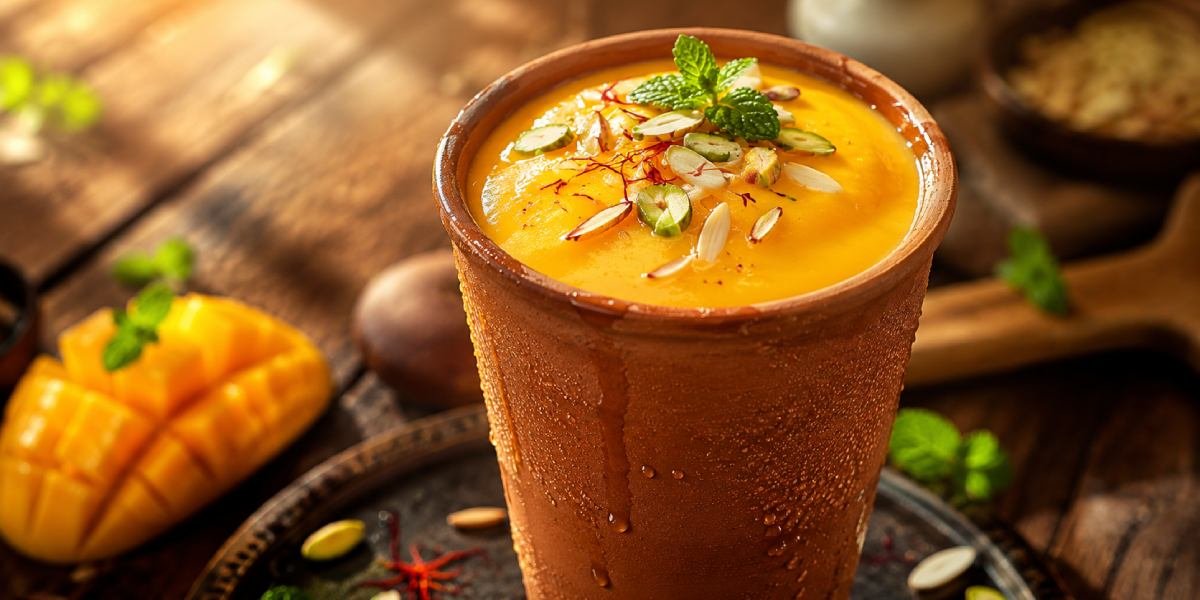
Pour the lassi into a traditional clay glass (kulhad) or a tall glass. Drizzle the saffron milk on top, and garnish with sliced pistachios and almonds.
Ditching the Sugar Syrup: A Gut-Friendly Powerhouse
A traditional restaurant lassi is a calorie bomb because they use white sugar syrup to make up for sour yogurt or cheap mangoes.
By using ripe, naturally sweet mangoes and a touch of honey, you turn this dessert into a genuine health food.
- Probiotics for the Heat: Summer heat weakens our digestion. The live bacteria in fresh dahi strengthen your gut lining, improve digestion, and cool your internal body temperature.
- The Cardamom Benefit: Elaichi isn’t just for smell. It is a natural digestive aid and helps reduce the bloating that heavy dairy can sometimes cause.
- Nutrient-Rich: Mangoes are packed with Vitamin A and C, which help protect your skin from the sun-damage we discussed in our de-tanning guide.
Frequently Asked Questions (FAQs)
Q: Can I make this a Vegan Mango Lassi?
A: Absolutely, Dev. You can swap regular dairy yogurt for Coconut Milk Yogurt. Coconut and mango are a match made in heaven. The natural fats in coconut maintain that thick, creamy texture perfectly. Avoid soy yogurt as it can have a strong aftertaste that fights the mango aroma.
Q: How long can I store this in the fridge?
A: It is best enjoyed fresh. However, you can store it in an airtight glass jar for up to 24 hours. Do not store it longer, as the active cultures in the yogurt will continue to ferment, making the lassi sour.
Q: Why does my lassi taste sour?
A: Your yogurt was likely too old or your mangoes weren’t fully ripe. Always taste your yogurt before blending. If it is sour, add an extra teaspoon of honey and a splash of heavy cream to neutralize the acidity.
Q: Can I use dried mango powder (Amchur)?
A: No! Amchur is highly acidic and salty, used for savory curries. It will completely ruin the sweet, floral profile of a lassi.
The King of Summer is Served
The sun is going to stay hot. The Indian summer is going to keep testing our patience. But when you have a cold, thick, cardamom-scented glass of lassi in your hand, the heat doesn’t feel like a punishment anymore. It feels like an excuse to celebrate.
This Mango Lassi Recipe is the ultimate weekend hack. It is simple, it is fast, and it respects both your body and your taste buds.
So, ignore the delivery apps today. Step into the kitchen. Grab the blender. And pour yourself a glass of pure, golden summer.