Every used car buyer has a fantasy. You see the listing online: “Single owner, less than 30k km, lady driven, showroom maintained.” The price is ₹5 Lakhs cheaper than a new one. It looks pristine in the photos. You imagine yourself driving it home, having “outsmarted” the market.
But there is a reason some cars end up on the resale market too early.
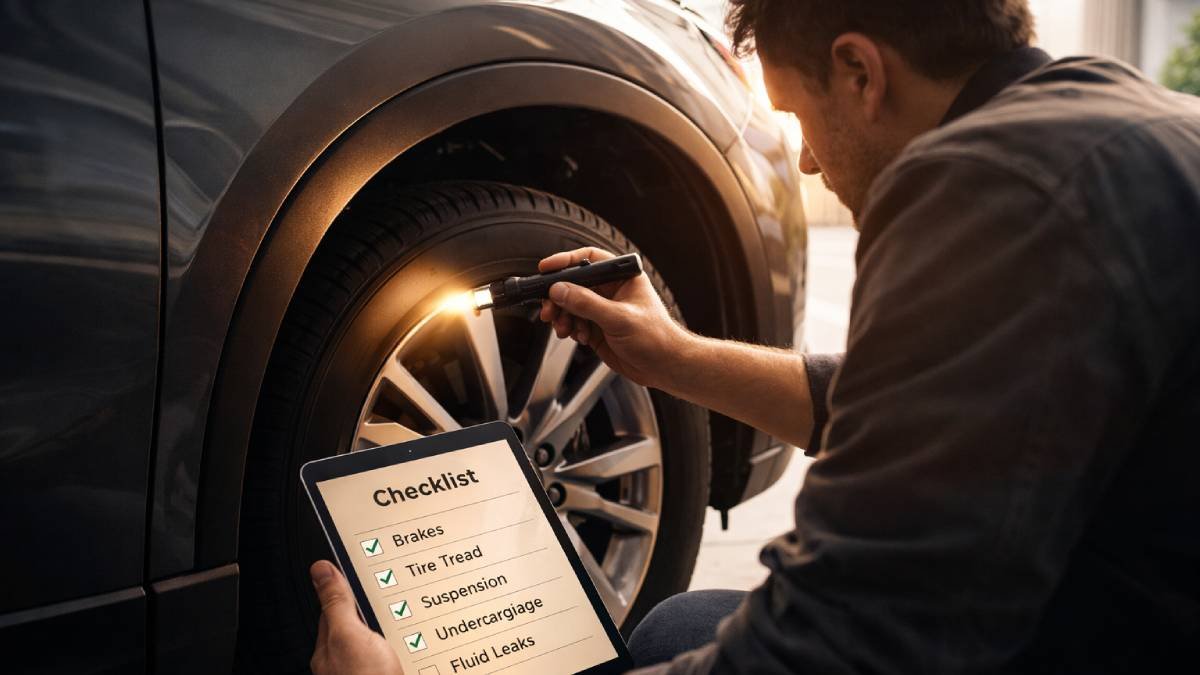
The Used Car Inspection is not just about checking if the engine starts. It’s about detective work. You are looking for the evidence of a “Lemon”—a car that was driven hard, neglected, or worse, survived a flood. If you skip this, you aren’t just buying a car; you’re buying someone else’s worst financial decision.
Here is how you perform a master-level inspection, even if you don’t know a piston from a spark plug.
The “Cold Start” Protocol: What the Salesman Won’t Tell You
The biggest trick in the book is “Warm Starting.” If the seller knows the car has trouble starting or has smoke issues, they will run the engine for 15 minutes before you arrive. By the time you get there, the engine is warm, the oil is thin, and everything sounds perfect.
The Golden Rule: Tell the seller: “I am coming at 9 AM, and please ensure the car is cold. I want to see a cold start.”
When you get there, touch the hood. If it’s warm, walk away. When you turn the key (or push the button), listen. A healthy engine should start instantly. Any stuttering, long cranking, or a “death rattle” in the first five seconds is a red flag. And watch the exhaust. A puff of blue smoke is oil burning (expensive engine repair); white smoke is a blown head gasket (catastrophic repair).
The Perimeter Walk: Reading the “Body Language”
You don’t need to be an engineer to spot a car that’s been in a major accident. You just need to be observant.
The Panel Gap Symmetry
Look at the gaps between the doors, the hood, and the fenders. They should be perfectly consistent, like a razor line. If the gap on the left side of the hood is wider than the right, that car has been in a crash. Modern factories use robots for assembly; their gaps are perfect. If they aren’t, a human “fixed” it later.
The Paint Mismatch
Stand ten feet back. Look at the car from different angles under direct sunlight. Does the front door look slightly “greener” or “bluer” than the rear door? That’s evidence of a paint job, usually to hide scratches or bodywork after a fender bender.
The “Glass Code” Secret
Every piece of glass on a car has a small stamp in the corner with a date code. If your windshield says 2024, but your side window says 2021, that window was replaced. Ask yourself: why? Was it a break-in, or was it a roll-over accident?
The “Digital Skeleton”: Cracking the Electrical Code
In 2026, the engine is only half the car. The other half is the computer. A car that has been flooded is often a “zombie”—it runs today, but the electronics will rot from the inside out over the next six months.
The Smell Test
Open the car, turn off the AC, and take a deep breath. Do you smell “Musty Mold” or excessive “Air Freshener”? Sellers use heavy scents to mask the smell of damp carpet or moldy upholstery. If the car smells like a flower shop, be suspicious. Pull up the floor mats. Feel the carpet underneath. Is it damp? That’s your flood-damage warning.
The “Warning Light” Scam
Some shady sellers will disconnect the “Check Engine” bulb or put a piece of tape over it.
- The Hack: Before you start the engine, turn the key to the “On” position (without starting it). All the dashboard lights should glow: Check Engine, Oil, Battery, Airbag. If the “Check Engine” light never appears, the bulb has been removed to hide an active error code.
The Million-Kilometer Engine: Under the Hood
You’ve checked the body and the electronics. Now for the heart.
The Oil Cap Test
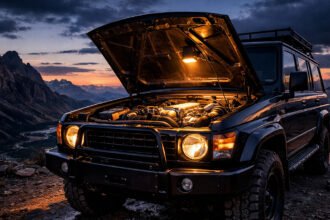
Open the oil filler cap. Look at the underside of it. If you see a thick, creamy, “milkshake-like” substance, that is a mix of oil and coolant. It means the engine is overheating and failing. It is a walk-away moment.
The “Leak” Hunt
Take a flashlight and look at the engine block. You are looking for “weeping.” A little oil is okay, but if the engine looks wet and grime is sticking to it, you have a leaking seal. Gaskets aren’t expensive to buy, but to change a head gasket, you have to tear the whole engine apart. That is a massive labor bill.
The “Million-Kilometer” Proof
If you want to verify the car is one of those long lasting cars we’ve discussed, check the pedal wear. If the seller says the car has 30,000 km, but the brake pedal rubber is worn smooth and the driver’s seat cushion is flattened, the car has done 150,000 km. It’s an odometer rollback.
The Deal-Breaker Test Drive
Most people drive the car for two minutes around the block. That tells you nothing. You need to simulate a real-world scenario.
1. The “Brake Pulse”
Find a safe, straight road. Speed up to 60 kmph and brake firmly. If the steering wheel vibrates or the pedal “pulses” under your foot, the brake rotors are warped. That’s a ₹15,000 repair right there.
2. The “Steering Pull”
On a flat, straight road, loosen your grip on the wheel for a second. If the car immediately veers left or right, the alignment is off, or worse—the chassis is bent.
3. The “Gearbox Crunch”
If it’s a manual, do the gears feel like they’re hitting gravel? That’s a sign the synchros are gone. If it’s an automatic (CVT or DSG), does it “jerk” when it changes gears? Jerky automatics are ticking time bombs that will eventually leave you stranded on the highway.
Frequently Asked Questions (FAQs)
Q: Should I bring a mechanic with me?
A: Always. Even if you follow this guide, a mechanic has a “second sense.” They can hear an engine knock that you will miss. Paying a mechanic ₹1,000 to inspect a car before you buy it is the cheapest insurance policy you will ever purchase.
Q: What if the seller refuses a third-party inspection?
A: Walk away. Immediately. A seller with nothing to hide will let you inspect the car. A seller who says “Take it or leave it” usually knows the car has a hidden defect.
Q: Are digital “Vehicle History” reports reliable?
A: They are useful, but not 100% accurate. In India, many insurance claims are settled “outside” to avoid higher premiums, meaning the car might have had a major accident that never appeared on the official history report. Trust your eyes more than the PDF.
Q: What is the most expensive thing to fix?
A: The Transmission and the Chassis. Engines can often be rebuilt, but if the chassis is damaged, the car will never drive straight again. Never buy a car with frame damage.
Don’t Buy the “Story,” Buy the Machine
The most important part of a Used Car Inspection isn’t the technical checks—it’s the emotional check.
Don’t let the seller’s charm, the low price, or the “once-in-a-lifetime” urgency distract you. A car is a machine of cold physics. It doesn’t care about your budget, and it doesn’t care if the seller is a nice person. It only cares about its condition.
Be the detective. Ask the tough questions. Crawl under the car. If the deal doesn’t feel right, leave the deposit in your pocket. There is always another car, but there is only one wallet. Don’t let yours be the one that pays for someone else’s “lemon.”